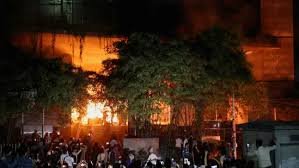
The persecution of Hindus in Bangladesh and the the global community’s relative silence is a deeply emotive and politically sensitive issue, rooted in history, demography, and regional geopolitics. Bangladesh was founded in 1971 on principles of secularism, linguistic nationalism, and cultural pluralism, yet over the decades its religious minorities, particularly Hindus, have experienced recurring cycles of discrimination, violence, and marginalization. While Bangladesh officially remains a secular republic, the lived reality for many Hindus often contradicts the constitutional promise of equality and protection.
Hindus in Bangladesh constitute a shrinking minority, declining from nearly 22 percent of the population in 1951 to less than 8 percent today. This demographic erosion is not merely a natural outcome of migration trends but is closely linked to sustained insecurity, sporadic communal violence, land dispossession, and social intimidation. Incidents of attacks on Hindu temples, homes, and businesses tend to spike during periods of political instability, elections, or regional tensions, particularly when extremist groups exploit religious sentiments. The persistence of laws such as the Vested Property Act, despite reforms, has historically enabled the confiscation of Hindu-owned land, reinforcing a sense of systemic injustice and vulnerability.
Communal violence against Hindus often follows a familiar pattern. A rumor, a social media post, or an alleged act of blasphemy becomes the trigger for mob attacks, while local authorities frequently respond slowly or inadequately. Although the Bangladeshi state officially condemns such violence and occasionally prosecutes offenders, accountability remains inconsistent. This gap between rhetoric and action fuels the perception among minorities that their security is conditional and fragile. Fear, rather than citizenship rights, becomes the dominant framework through which many Hindus experience daily life, encouraging quiet migration to India or deeper social withdrawal within Bangladesh.
The silence or muted response of the international community further compounds this sense of abandonment. Global powers often view Bangladesh primarily through strategic and economic lenses: its role in regional stability, counterterrorism, garment exports, and humanitarian cooperation, especially regarding the Rohingya refugee crisis. Human rights concerns involving Hindu minorities rarely receive sustained diplomatic attention, partly because they complicate existing geopolitical priorities. Western governments, multilateral institutions, and international media tend to respond more forcefully to crises that align with dominant global narratives, while minority persecution in South Asia is often treated as an internal or regional issue.
Another reason for global silence lies in the political framing of the issue. Advocacy for Hindu persecution is sometimes dismissed as partisan or instrumentalized by regional rivals, particularly in the India-Bangladesh context. This politicization discourages neutral international engagement, as external actors fear being seen as endorsing nationalist or majoritarian agendas. As a result, genuine human rights concerns risk being overshadowed by strategic calculations and ideological discomfort, leaving victims without effective international advocacy.
The lack of sustained global pressure also reflects broader inconsistencies in the international human rights regime. Minority rights violations in smaller or strategically aligned states often receive less scrutiny than those in adversarial or high-profile countries. This selective attention undermines the credibility of universal human rights norms and reinforces cynicism among affected communities. For Bangladeshi Hindus, the absence of consistent international monitoring and advocacy sends a troubling message that their suffering does not carry sufficient geopolitical weight to matter.
Ultimately, addressing the persecution of Hindus in Bangladesh requires both domestic reform and international responsibility. Bangladesh must strengthen the rule of law, ensure swift justice in communal violence cases, protect minority property rights, and counter extremist narratives through education and governance. At the same time, the global community must move beyond selective silence and engage constructively but firmly, emphasizing minority protection as an integral part of democratic and developmental partnerships. Without such balanced engagement, the cycle of insecurity, migration, and silence will persist, eroding not only the rights of a vulnerable minority but also the moral foundations of international human rights advocacy.




Leave a Reply