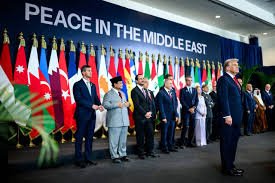
Donald Trump peace plans are becoming challenge to ”world peace”. Trump’s so-called peace plans are increasingly being viewed not as instruments of stability but as disruptive forces that challenge the very idea of world peace. His approach to international conflict is deeply personalized, transactional, and driven by spectacle rather than by diplomacy rooted in consensus, international law, or institutional continuity. By intervening in sensitive issues across continents with unilateral declarations and improvisational solutions, Trump has blurred the line between peacemaking and provocation, often aggravating tensions instead of resolving them.
At the core of Trump’s peace initiatives lies an obsession with personal legacy. Peace, in his worldview, is not a collective achievement built through sustained negotiations but a dramatic event that can be branded, marketed, and claimed as an individual triumph. This has led him to sideline established diplomatic processes and multilateral forums, replacing them with abrupt announcements and coercive bargaining. Such methods may produce short-term optics, but they undermine trust among stakeholders who feel excluded, coerced, or humiliated. Peace imposed without legitimacy rarely endures, and Trump’s interventions frequently ignore this fundamental principle.
In Europe, Trump’s handling of security arrangements has shaken the foundations of post-war stability. By questioning long-standing alliances and treating collective defense commitments as financial transactions, he injected uncertainty into regions already facing renewed geopolitical stress. His statements on territorial disputes and security guarantees emboldened revisionist actors while unsettling allies who rely on predictable leadership. Rather than acting as a stabilizing force, his interventions often weakened deterrence and encouraged brinkmanship, increasing the risk of escalation rather than reducing it.
In West Asia, Trump’s peace initiatives have been particularly controversial. His tendency to frame complex historical conflicts in simplistic terms has marginalized core issues such as sovereignty, displacement, and self-determination. By openly favoring one side while branding the outcome as “peace,” he transformed diplomacy into an exercise of power politics. This approach deepened resentment, delegitimized negotiation frameworks, and fueled radicalization, making long-term reconciliation more distant. Peace that ignores justice and balance becomes a source of future conflict, not its solution.
In Asia, Trump’s interventions followed a similar pattern of unpredictability. Dramatic summits, public threats, and sudden reversals created confusion among allies and adversaries alike. While symbolic engagements were projected as breakthroughs, the absence of sustained follow-through left underlying tensions unresolved. Worse, his readiness to personalize relations with authoritarian leaders weakened norms of accountability and human rights, signaling that strategic theatrics mattered more than structural peacebuilding.
Africa and Latin America were not spared either. Trump’s disengagement from development-oriented diplomacy and preference for coercive tools reduced the space for conflict prevention and mediation. By treating regions as peripheral unless they directly affected domestic politics, his policies contributed to neglect rather than peace. In some cases, heavy-handed interventions and sanctions exacerbated economic distress, indirectly fueling instability and social unrest.
Perhaps the most dangerous aspect of Trump’s peace plans is their erosion of global norms. By dismissing international institutions, treaties, and collective decision-making as obstacles, he weakened the very architecture designed to manage conflicts peacefully. World peace is not sustained by strongmen deals but by predictable rules, mutual restraint, and shared responsibility. Trump’s interventions replaced these with volatility and personalization, making the global system more fragile.
In essence, Trump’s peace plans challenge world peace because they redefine peace as dominance rather than balance, as spectacle rather than process, and as personal victory rather than shared stability. His interventions across continents demonstrate that peace without inclusivity, legitimacy, and institutional grounding is not peace at all, but a temporary pause before deeper and more dangerous conflicts emerge.


Leave a Reply