Whether Iran might “return to Persia” culturally, religiously, and socially by leaving Islam behind is a complex question and cannot be reduced to a simple reversal of history. Iranian identity today is the product of deep historical synthesis rather than a static set of elements that can be re-settled exactly as they were before 1400 years of Islamic influence. Understanding this requires looking at how culture, religion, and society in Iran have evolved and how current trends might shape future directions.
Iranian culture before Islam was one of the world’s great civilizations, with its own language, traditions, and religious practices such as Zoroastrianism. After the 7th-century Arab conquest, Islam spread across Persia and over time became deeply embedded in social and political life. But this was not a simple replacement of Persian culture; rather, Iranian culture absorbed Islam and re-interpreted it in uniquely Persian ways, producing a hybrid that is reflected in literature, philosophy, and everyday practices. The fusion of Persian cultural norms with Shiʿi Islam has persisted as a central axis of identity for many Iranians, so much so that some scholars argue the two are now inseparable facets of what it means to be Iranian.
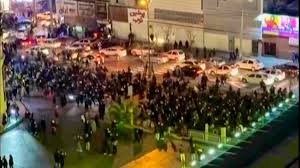
At the same time, debates about identity are active within Iranian society. There are intellectuals, activists, and ordinary citizens who feel that the political dominance of religious institutions, especially since the 1979 Revolution, has constrained cultural and personal freedoms and imposed an ideological framework that many find restrictive. Some voices call for a separation of religion from politics, akin to secular governance models seen elsewhere, suggesting that Islam should remain a personal faith rather than a basis for state authority. These ideas are especially visible among portions of the younger generation, urban professionals, and political reform movements who push for more democratic and secular civic structures.
Patterns of social change also signal evolving attitudes toward Islam’s role in society. There are reports of growing interest in secularism and democratic values, and some sociological analyses suggest that parts of Iranian society are distancing themselves from institutionalized religion, expressing desires for legal frameworks not rooted in Islamic jurisprudence. However, these trends are neither uniform nor dominant across the entire population, and religious identity remains influential in many communities.
The notion of “returning to Persia” often evoked in cultural discussions typically refers to reviving appreciation for pre-Islamic history, language, and national heritage, not necessarily abandoning Islam altogether. Persian cultural revival movements emphasize language, art, and historical consciousness, and many argue that a strong national identity can coexist with religious diversity and personal belief systems. Persianization historically involved the spread of Persian cultural traits across non-Persian societies, showing how cultural identity is fluid and transformative rather than fixed.
Religiously, the picture is complex. Islam in Iran is not monolithic; it has been refracted through centuries of philosophical, mystical, and legal interpretation that differ from forms found elsewhere. Some analysts argue that because Islamic norms were integrated into Iranian culture so deeply, any wholesale removal of Islam from the societal fabric would be extremely difficult and would require fundamental structural changes in political and social institutions. For many people, Islam remains part of their sense of continuity with family, community, and ethics, even if they disagree with how religious authority is exercised by the state.
In practice, a future in which Iran “leaves Islam” entirely is unlikely in the short or medium term because Islam is woven into the country’s legal system and political theology. Deep secularization would require not just cultural shifts but major transformations in governance, education, and legal frameworks—a process that would likely take generations and be deeply contested. What is more plausible is a continuing negotiation of identity, where many Iranians strive to balance appreciation for ancient Persian heritage with personal spiritual beliefs, cultural pluralism, and aspirations for individual freedoms and democratic governance. In this sense, the future of Iran’s identity is not about a simple return to a pre-Islamic past, but a dynamic re-imagining of what being Iranian means in a modern, interconnected world.



Leave a Reply